Commercial Moves in London
Reliable commercial moving support for London businesses

Commercial moves in London need more than a van and a few strong boxes. They require planning, timing, local knowledge, and a team that understands how business premises work across a city as busy and varied as London. Whether you are relocating a small office in Shoreditch, moving a retail unit in Clapham, transferring a clinic in Kensington, or downsizing a workspace near Canary Wharf, the right moving service can make a major difference to your day-to-day operations.
A business move affects staff, customers, suppliers, equipment, and deadlines. That is why local customers often look for commercial removals in London that are organised, flexible, and built around the realities of the capital. A good move should help reduce disruption, protect important items, and keep the process clear from start to finish. It should also take into account London-specific challenges such as loading bay restrictions, congestion, controlled parking zones, narrow entrances, lift access, and building rules that vary from one postcode to the next.
If you are planning a move for an office, shop, studio, warehouse unit, hospitality venue, or professional practice, it helps to work with a team that handles business relocations every day. Commercial moves in London are rarely straightforward, but with the right preparation they can be managed in a calm, structured way that keeps your business moving forward.
What commercial moving services can include

Every business move is different, which is why a flexible service matters. Some customers only need help with transport and lifting, while others want a full relocation service that covers packing, dismantling, furniture reassembly, and careful coordination with building management. A professional team should be ready to work around your schedule, your premises, and your equipment.
Typical services for business relocations in London may include:
- Pre-move planning and site checks
- Packing assistance for office and commercial contents
- Furniture dismantling and reassembly
- Safe handling of desks, chairs, filing cabinets, and storage units
- Movement of IT equipment, monitors, printers, and office peripherals
- Transport for archive boxes, stock, samples, and small fixtures
- Short-term or phased moving schedules for businesses that cannot shut down completely
- Placement of items in the right rooms or zones at the destination
- Support for premises with stairs, lifts, tight corridors, or restricted parking
Some companies also need help with specialist items such as retail display units, salon equipment, hospitality furnishings, medical furniture, or studio and creative materials. In those cases, the move must be handled with extra care and an eye for detail.
Why London businesses need a local moving team
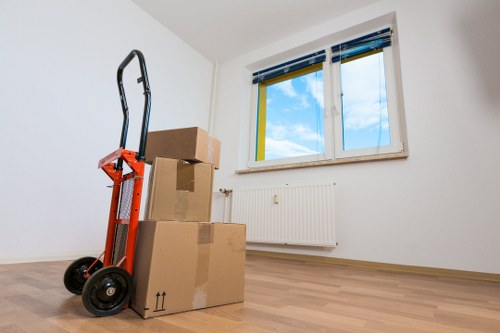
London is one of the most demanding places to relocate a business. Different boroughs have different access rules, traffic patterns, and building procedures. A move that might be simple in a quieter area can become complicated quickly if parking is limited or if a building only allows loading at certain times. This is where a local team becomes valuable.
Businesses across Central London, East London, North London, South London, and West London often face similar problems: limited street space, strict time windows, busy footfall, and a need to protect property while working quickly. Areas such as Westminster, Camden, Islington, Hackney, Southwark, Lambeth, Hammersmith, Ealing, Wandsworth, and Greenwich can all present their own moving challenges depending on the exact street and building type. A commercial mover who already knows the city is better placed to plan around these issues.
Local experience also matters when dealing with varied property types. London businesses operate from period buildings, modern office blocks, mixed-use developments, high streets, industrial estates, converted warehouses, and shared workspaces. Each type of property brings different access points, security procedures, and timing needs. Choosing a company that regularly handles commercial moves London wide means you benefit from practical knowledge, not guesswork.
Who this service is for
Commercial relocations are not just for large corporations. Many local customers need moving support for much smaller but still important moves. A professional service can be useful whether you are moving a single room or a larger multi-floor premises.
This service is often suitable for:
- Offices and co-working spaces
- Shops, showrooms, and retail units
- Salons, barber shops, and beauty clinics
- Cafés, restaurants, and hospitality venues
- Healthcare, therapy, and consultation rooms
- Creative studios and design agencies
- Storage and archive rooms
- Light industrial and trade premises
- Start-ups moving into their first commercial unit
- Established businesses upgrading to larger premises
For some customers, the move is urgent because a lease is ending, a business is expanding, or a building is being refurbished. Others may be relocating to improve transport links, be closer to clients, or move into a space that better fits the team. Whatever the reason, the process should feel organised and manageable.
Moves that need extra coordination
Some business moves involve more than standard office furniture. If your relocation includes fragile stock, important paper records, specialist equipment, or items that require careful sequencing, you will likely need a more detailed plan. That may include packing categories by department, labelling items by floor or room, and coordinating the move around business hours.
How commercial moves are usually handled

A well-run move generally follows a simple but careful process. The aim is to reduce disruption, protect your premises, and make sure your team can settle in quickly at the new site. The exact steps will vary depending on the size of the move, but the structure is often similar.
- Initial discussion – You explain what is being moved, from where, and to where. This is where timings, access concerns, and any special items are discussed.
- Site assessment – For more complex moves, it helps to review access points, parking, stairs, lifts, and any restrictions at both properties.
- Plan and scheduling – The move is arranged around your business hours, building rules, and any time-sensitive requirements.
- Packing and preparation – Items are prepared in a clear, organised way, with labels and grouped boxes helping the move run smoothly.
- Loading and transport – Furniture and boxes are handled carefully and loaded in the right order for efficient unloading.
- Unloading and placement – Items are delivered to the correct rooms, floors, or zones so your team can get started quickly.
- Final checks – The team confirms that the main items are where they should be and that the property is left as agreed.
This kind of structure is especially helpful in busy London settings, where timing and access can change quickly. A move that is carefully planned is much less likely to cause unnecessary disruption.
What to expect from a professional team

When hiring a moving company for a business relocation, it is reasonable to expect more than transportation alone. The best service should feel organised, respectful of your premises, and responsive to your schedule. Strong communication matters because the people moving your business are handling equipment that may be needed immediately at the new site.
Customers often look for:
- Clear communication before the move
- Reliable arrival times
- Careful handling of office furniture and equipment
- Respect for building rules and neighbours
- Practical solutions for parking or access issues
- Flexible planning for phased or out-of-hours moves
- Help with heavy lifting and awkward items
- A clean, efficient process that minimises downtime
Trust is important in commercial relocations because your team may be relying on the moving schedule to reopen quickly, keep client appointments, or continue operations in a new location. A local provider that understands London working patterns can help you stay on track.
Useful for businesses with limited downtime
If your company cannot stop trading for long, an organised move can be staged across evenings, weekends, or multiple visits. This is particularly helpful for offices with active phone lines, retail units with stock turnover, or client-facing spaces that need to reopen quickly. The ability to work around your availability is one of the biggest benefits of a local commercial moving service.
Preparing for your business move
Good preparation makes a huge difference to the success of the move. Even when you hire experienced movers, your own planning can help save time, reduce confusion, and make unpacking much easier. Many London businesses find that a simple internal checklist keeps everyone aligned.
Before moving day, consider the following preparation steps:
- Assign one person or small team to oversee the move
- Decide what is moving, what is being stored, and what can be discarded
- Back up digital information and secure sensitive files
- Label boxes by department, desk, room, or floor
- Notify staff of the move plan and timings
- Check access, lift use, and parking arrangements at both locations
- Measure furniture and doorways if there are tight spaces
- Keep essential items separate for first-day use
You may also want to confirm practical details with your building manager or landlord, especially if your premises are in a managed office block, mixed-use development, or shared building. London properties often have rules for lift bookings, loading times, and protection of common areas, so early coordination is worthwhile.
Tip: If your business handles confidential records, specialist machinery, or expensive stock, set aside those items early so they can be packed and transported with extra care.
Local access and parking challenges across London
Anyone who has moved a business in London knows that access can be as important as the move itself. Streets can be narrow, parking can be limited, and loading areas may be shared with residents, deliveries, or public transport restrictions. These factors are one reason why local commercial removals need careful planning.
Different parts of London bring different challenges. In Central London, congestion and tight loading windows may be the main issue. In residential-commercial mixed areas such as Battersea, Peckham, Dulwich, Crouch End, or Chiswick, parking and neighbour access may need extra attention. In business districts like the City, Canary Wharf, King’s Cross, or White City, building management procedures and lift bookings can play a major role. On industrial estates or edge-of-town locations, larger vehicles may have easier access, but the move may involve heavier items or more equipment.
Professional movers familiar with the capital can anticipate these issues and plan around them. That may mean choosing the right vehicle size, arranging timed loading, coordinating with the building, or staging the move in sections to reduce pressure on the day.
Types of commercial premises commonly moved
Commercial relocations in London cover a wide range of premises. Some businesses are moving only a few desks and a printer, while others are transferring an entire fit-out with storage, signage, and specialist equipment. The service should be adapted to the property and the work being done there.
Common premises include:
- Serviced offices and private offices
- Retail shops and boutique stores
- Restaurants and takeaway units
- Medical rooms and therapy practices
- Creative agencies and recording spaces
- Warehouses and stock rooms
- Workshops and trade units
- Shared desks and co-working environments
Each setting has different priorities. A retail move may need to protect stock and display systems. An office move may focus on IT, paperwork, and workstation reinstallation. A hospitality move may involve equipment, furniture, and a tight turnaround. A clinic or practice may need a calm, tidy, and carefully sequenced relocation. The best moving support is one that understands the use of the building, not just the contents inside it.
When a phased move is the best option
Some customers prefer to move in stages rather than all at once. This can be especially useful for larger businesses, shared office floors, or companies that need to keep part of their operation running during the relocation. Staged moving can also help with busy buildings where lift access is limited or where loading must be shared between multiple tenants.
Pricing factors for commercial moves in London
Business customers often want to understand what affects the cost of a commercial move before requesting a quote. While exact pricing depends on the details of the job, several practical factors usually shape the final figure.
These may include:
- The size of the move and number of items
- Distance between the old and new premises
- Access conditions at each site
- Parking or waiting restrictions
- Need for packing, dismantling, or reassembly
- Volume of heavy, fragile, or specialist items
- Whether the move is outside normal working hours
- Number of staff and vehicles needed
- Any additional planning or multiple trips
In London, access can affect time and effort as much as distance does. A short move across a few postcodes can still take careful coordination if the building has lift restrictions, loading bay rules, or no easy stopping point. That is why a tailored quote is more useful than a rough estimate based only on mileage.
If you are arranging a move for your company, request a free quote based on your actual premises, contents, and timing needs. That gives you a clearer picture of the work involved and helps you compare options properly.
Why choose a local company for your move
There are real advantages to using a local business for commercial moves in London. A local team is more likely to understand the city’s pace, the pressures of trading in busy districts, and the access issues that can slow a move down if they are not planned for properly.
Benefits of working with a local commercial mover include:
- Better understanding of London roads, parking, and access patterns
- More practical planning for borough-specific restrictions
- Easier coordination for short-notice or phased moves
- Useful experience with mixed property types and busy buildings
- More relevant advice for local business premises
- Flexible scheduling for early starts, late finishes, or weekend moves
A local provider can also be easier to brief on the realities of the move. If your premises are on a busy high street, inside a courtyard, above a shop, or in a building with multiple tenants, local experience can help avoid common mistakes. That does not just save time; it also helps protect your stock, furniture, and day-to-day trading.
Important: choosing a local team is not only about convenience. It is about working with people who understand how London businesses operate and how quickly plans can change.
Common questions from London customers
Many business customers want straightforward answers before they book. Here are some of the questions that often come up when arranging a commercial relocation in the capital.
Can you move a business outside normal office hours?
Yes, many commercial moves are arranged early in the morning, in the evening, or over weekends so that disruption to staff and customers is reduced. This is especially useful for client-facing spaces and busy offices.
Do you help with packing?
Yes, packing support can be included depending on the service you need. Some customers want full packing assistance, while others prefer to pack internally and only need transport and loading.
Can you move from a building with lift restrictions?
Yes, but it helps to know about lift bookings, stair access, and any protection requirements in advance. London office blocks and managed developments often have specific rules, so early planning is important.
What if the new premises are not ready yet?
In some cases, a staged move or split relocation may be the best option. If there is a delay with your new unit, it may be possible to move part of the contents first and plan the rest later.
Do you handle fragile or specialist items?
Yes, but these should be identified before the move so they can be packed and handled appropriately. This is particularly important for IT equipment, displays, archives, and delicate business property.
FAQs about commercial removals in London
How far in advance should I book a commercial move?
It is sensible to book as early as possible, especially if you need a specific date, out-of-hours timing, or help with a larger premises. London moves often require more coordination than people expect.
Can you move a small office as well as a large one?
Yes. Smaller offices, start-ups, and independent businesses often need just as much planning as larger companies, especially if there is limited access or valuable equipment to protect.
What should I do with files and confidential documents?
Secure sensitive paperwork before the move and keep it clearly separated. Many customers choose to transport important records themselves or use a controlled packing method.
Can you work around building management rules?
Yes, provided those rules are shared before the move. Lift bookings, loading times, and common-area protection requirements should be discussed in advance so the day runs smoothly.
Is the service suitable for retail stock and display units?
Yes. Retail and showroom moves are common, but the contents should be listed carefully so that stock, shelving, and fixtures are transported in the right order.
Do you help with furniture dismantling?
Many business moves need desks, shelving, or storage units taken apart before transport and reassembled afterward. This can save time and make it easier to move through tight access points.
Areas covered across London
Commercial moving support is often needed across the whole city, from central districts to outer boroughs. A local team can typically assist businesses in a wide range of locations, including:
- Central London
- West London
- East London
- North London
- South London
- Inner and outer boroughs
- Business districts and mixed-use neighbourhoods
- High streets, industrial estates, and office parks
That may include locations such as Westminster, Holborn, Paddington, Hammersmith, Acton, Stratford, Shoreditch, Hackney, Walthamstow, Tottenham, Brixton, Clapham, Croydon, Wimbledon, and many surrounding areas. Because London is so varied, it is helpful to work with movers who understand the practical differences between these locations.
If your premises are in a busy area with limited parking or within a managed building, mention that early when you request a quote. It helps the team plan the right vehicle, crew size, and timing for the job.
What makes a smooth business relocation
The smoothest business moves are usually the ones where the details are decided early. Clear planning, sensible packing, and open communication with everyone involved make a major difference. A professional team can help with the physical part of the move, but your own preparation also shapes the outcome.
To keep things on track, focus on these priorities:
- Share the move schedule with staff in advance
- Make sure important documents are stored safely
- Label rooms, departments, or destinations clearly
- Check access routes and entry points at both premises
- Confirm if any items need special handling
- Plan for first-day essentials at the new site
- Allow time for unexpected delays in a busy city environment
Business moves often go more smoothly when the team arrives to a premises that is already organised and ready to receive items. A little preparation can make unpacking faster and reduce stress for staff after the relocation.
Small details that make a big difference
Things like box labels, desk numbers, and room names may seem minor, but they can save a huge amount of time once the move is underway. In a city where access windows can be limited, that efficiency matters.
Book your commercial move with confidence
If you are planning a business relocation, the most helpful next step is to speak with a local team and discuss your requirements in detail. Whether you are moving a small office, a busy retail space, or a larger commercial unit, the right moving support should make the process feel manageable from the start.
Look for a service that understands London conditions, communicates clearly, and can adapt to your premises and timing. A move should support your business, not interrupt it more than necessary. With the right planning, you can relocate with less stress and a clearer path back to normal trading.
Contact us today to discuss your business move, ask questions about access or timing, and request a free quote for your London relocation. If you are ready to organise your move, book your service now and take the first step toward a smoother transition.
Commercial relocations do not need to be overwhelming. With practical planning, local knowledge, and a service built around the needs of London businesses, your move can be handled in a way that is efficient, careful, and tailored to your premises.