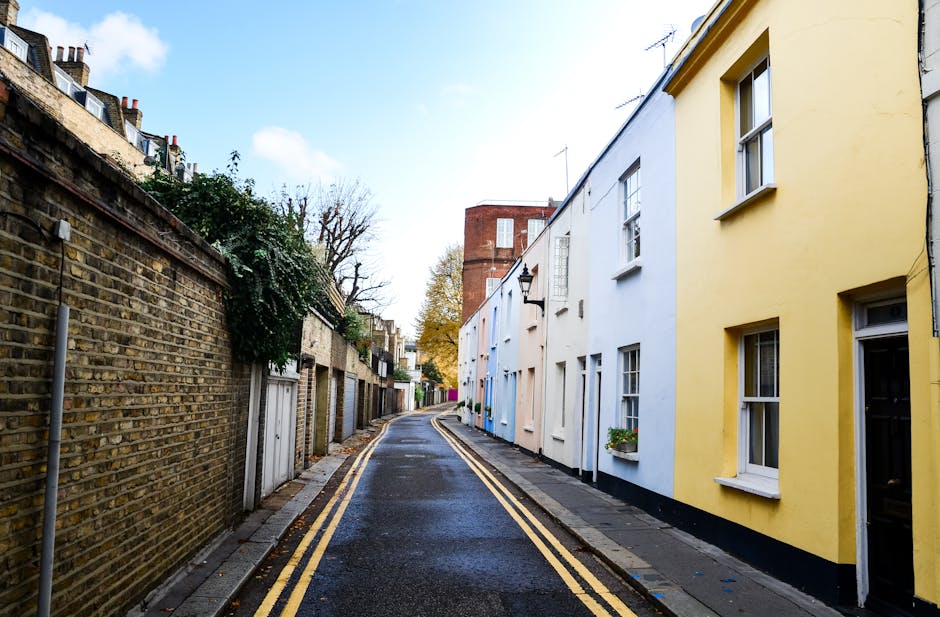
Notting Hill Furniture Removals for Narrow Street Moves: A Practical Guide That Actually Helps
Moving furniture in Notting Hill sounds straightforward until you see the street. Tight turns, parked cars, basement steps, low-hanging branches, busy neighbours, and a van that is just a little too large for comfort. That is the reality behind Notting Hill furniture removals for narrow street moves. It is not just about lifting sofas and loading boxes; it is about planning access, protecting property, and getting everything done without turning the day into a slow, stressful puzzle.
If you are trying to move a flat, refurbish a house, or clear a property in one of West London's narrower residential streets, the details matter. In this guide, we break down how narrow-street furniture removals work, what makes them different, what to check before move day, and how to avoid the kinds of mistakes that cause delays, damage, and needless expense. You will also find a comparison table, a practical checklist, and a real-world example that reflects the kind of moving jobs people face in Notting Hill every week.
Quick expert summary: narrow-street moves are won or lost before the van arrives. The best results come from accurate access checks, compact vehicle planning, careful packing, and a removal team that knows how to work in constrained London streets without rushing the job.
- Table of Contents
- Why narrow street moves matter in Notting Hill
- How the moving process works
- Key benefits and practical advantages
- Who this is for and when it makes sense
- Step-by-step guidance
- Expert tips for better results
- Common mistakes to avoid
- Tools, resources and recommendations
- Law, compliance, standards, or best practice
- Options, methods, or comparison table
- Case study or real-world example
- Practical checklist
- Conclusion
- Frequently asked questions
Why Notting Hill furniture removals for narrow street moves Matters
Notting Hill is beautiful, but it is not always forgiving. The streets can be narrow, parking can be limited, and access is often shared with residents, visitors, delivery vans, and the occasional frustrated driver trying to reverse somewhere they really should not. For furniture removals, that creates a very specific problem: the move may be physically simple, but operationally awkward.
Why does this matter so much? Because awkward access changes everything. A chest of drawers that would take ten minutes in a wide suburban driveway might take thirty minutes in a street where the van cannot park close to the entrance. A sofa that looks fine in the living room may have to be pivoted through a hall corner, down a step, and around a tight front gate. That is the sort of thing people only discover on the day, usually with a sigh and a tape measure in hand.
When access is tight, the moving strategy needs to be more precise. In our experience, the most successful narrow-street moves are the ones where everyone knows the plan early: what is being moved, from where, through which door, and into which vehicle. A good mover does not just arrive and start lifting. They think ahead about street width, loading position, item size, and timing. That is the difference between a smooth move and a messy one.
There is also the neighbour factor. In areas like Notting Hill, people live close together. Sticking to sensible unloading times, keeping pathways clear, and avoiding unnecessary noise is part of moving well. It is basic courtesy, sure, but it also keeps the day calmer for everyone involved. And honestly, a calm move is usually a faster move.
If you want a broader overview of moving support before choosing the right service, the general removal services page is a useful place to understand the wider range of moving help available.
How Notting Hill furniture removals for narrow street moves Works
The process is simple in theory and a bit more nuanced in practice. Narrow street furniture removals usually work best when they are broken into three stages: access planning, careful collection, and controlled delivery. That may sound obvious, but the quality of each stage makes a real difference to the final result.
1. Access planning comes first
This is where the moving company checks the practical constraints. Is there legal loading space nearby? Can a removal van get close enough to the property? Is there a staircase, a steep hallway, a basement entrance, or a need for extra parking time? These details help shape the whole move.
For Notting Hill in particular, access planning often includes checking if larger vehicles would create problems and whether a more compact vehicle is the smarter choice. A smaller removal van or a flexible man with van setup is often more practical than trying to force a larger vehicle into a street that simply does not suit it.
2. Furniture is prepared for safe handling
Once access is understood, the items themselves need attention. That means disassembling where possible, wrapping fragile surfaces, protecting corners, and separating items that could scratch each other. A table with loose legs, for instance, can cause trouble if it is carried as one heavy, awkward shape. Better to break it down in advance than to improvise at the curb.
Professional movers also think about weight distribution. The heaviest items go in first, but not just anywhere. They are positioned so the load stays stable and the van remains safe on the road. It is a small thing on paper. In reality, it prevents damage and reduces shifting while driving through narrow lanes.
3. Loading and unloading are managed in short, efficient stages
In tighter streets, the crew may work in a shuttle pattern rather than trying to keep a vehicle parked at the door for too long. That helps reduce disruption and keeps the move moving, so to speak. If access is blocked by another vehicle, the team may need to adjust timing or move from a nearby location. A flexible approach is essential.
This is also where packing quality matters. Well-packed boxes and protected furniture move faster. Loose handles, dangling shelves, or half-wrapped mirrors slow everything down. You notice it immediately once the loading starts.
4. Delivery is handled with the final access point in mind
People often focus on the pickup side and forget the destination. Yet narrow-street moves can be just as tricky at the receiving end, especially if the new home is in a similar location. The team needs to know where items are going inside the property, not just where they are going on the street. Basement flat? Top-floor walk-up? Tiny entrance hall? All of that shapes the delivery plan.
If your move includes furniture that may be reused, donated, or collected separately, the furniture pick up page can be relevant for understanding how individual items are handled alongside a wider move.
Key Benefits and Practical Advantages
Choosing a service that understands narrow street removals is not just about convenience. It brings several practical advantages that people sometimes overlook when comparing movers on price alone.
- Less risk of damage: tighter routes demand better handling, and better handling protects furniture, walls, doors, and floors.
- Faster load management: if the team knows how to work in short carry distances and restricted parking conditions, the move tends to flow better.
- Better vehicle choice: a compact van can be more efficient than a larger truck in streets where space is limited.
- Less disruption to neighbours: efficient loading and unloading reduce noise, congestion, and awkward street blockages.
- More accurate planning: good movers ask the right questions before move day, which reduces surprises.
- Reduced stress for you: and let's face it, that is the big one. When the logistics are under control, the whole day feels much easier.
Another advantage is that good narrow-street planning helps you make better decisions about what to move, what to dismantle, and what to leave until last. For example, a bulky wardrobe that would be a pain to manoeuvre might be simpler to disassemble the day before. That tiny bit of prep can save a lot of sweaty stairwell drama later.
If you are comparing broader moving options, you may also want to look at movers or the more hands-on man and van approach, depending on the size and complexity of the job.
Who This Is For and When It Makes Sense
This kind of service is ideal for people who are moving from or to a property where access is tight, parking is difficult, or the furniture itself is awkward to move. That sounds broad, but in London it covers a lot of people.
Typical situations where narrow-street removals make sense
- Residents moving from a flat on a narrow residential road
- People clearing furniture from a townhouse with a steep or cramped entrance
- Landlords or agents arranging a partial property clear-out
- Families moving with larger items such as sofas, beds, and wardrobes
- Small office or studio relocations where street access is restricted
- Anyone who cannot easily park a full-size vehicle at the property
Truth be told, people often think narrow-street moves are only for "difficult" homes. Not really. Even a perfectly ordinary move can become awkward if the street layout, parking rules, and furniture sizes do not line up. One person might have a single sofa and two bookcases. Another might have a whole household, but better access. The moving strategy changes depending on both.
If your move is part of a larger home relocation, it may help to explore home moves and house removals for a broader picture of how domestic moving support can be structured.
For business customers, narrow streets can affect timing and loading just as much. If your move includes desks, archive storage, or office furniture, the relevant service may sit closer to office removals or commercial moves. Same challenge, slightly different scale.
Step-by-Step Guidance
Here is a simple, practical way to handle a Notting Hill furniture move on a narrow street without overcomplicating it.
- Measure the awkward bits first. Not just the furniture. Measure door widths, hall corners, stair landings, and anything that could snag. A tape measure is boring until it saves your sofa.
- Check the street access. Think about parking, loading space, one-way systems, and whether a larger van is realistic.
- List the items by priority. Write down what must be moved first, what can be dismantled, and what needs extra care.
- Prepare protection materials early. Blankets, wraps, tape, and corner protection should be ready before the team arrives.
- Decide where the van will wait. If the road is narrow, choose a safe loading point and plan the carry route.
- Pack by room or category. Keep labels clear, especially if items are going into a flat, storage space, or separate rooms.
- Keep a clear path through the property. Shoes, plant pots, loose cables, and half-open doors are the usual culprits. They always seem to appear right when you are carrying something heavy.
- Confirm the arrival window and access notes. A five-minute conversation before the job can save fifteen minutes on the day.
- Be ready to adapt. If the van cannot park exactly outside, the crew may need to work from a nearby position. That is normal in London.
- Do a final walkthrough. Check cupboards, lofts, balconies, under beds, and behind doors. The number of times a charger or remote control gets left behind is almost funny. Almost.
This method works because it respects the real problem: tight access is manageable when you control the order of operations. If the order is wrong, even a short move can feel longer than it should.
Expert Tips for Better Results
The best narrow-street moves are often won by small decisions. Not grand ones. Small ones.
- Use the smallest vehicle that still fits the job. Bigger is not always better in Notting Hill. Sometimes a compact moving van is simply the sensible choice.
- Dismantle furniture before move day where possible. Beds, tables, and modular shelving are often easier to move in pieces.
- Protect the property as well as the furniture. Door jambs, bannisters, and floor edges take the abuse if you do not plan ahead.
- Move lighter items first if the route is tight. It gives the crew space to position bigger items more safely afterwards.
- Keep one person focused on access. Having somebody watch the route, doors, and vehicle position can help a lot.
- Time the move with the street rhythm. Early mornings or quieter periods are often easier than peak daytime traffic.
- Ask how the team handles awkward lifts. You want people who can think, not just carry.
A useful habit is to assume every extra metre of carry will take longer than you expect. That is not pessimism. It is just London. And on a narrow street, a calm pace usually beats a rushed one anyway.
If you are looking for a more general service benchmark, the removal company and removal companies pages can help frame what a broader professional offering looks like.
Common Mistakes to Avoid
Most problems in narrow street furniture removals are avoidable. The same few mistakes keep showing up, and they are all fixable if you spot them early.
- Guessing the van size. A vehicle that is too large can turn a simple move into a traffic headache.
- Underestimating door and stair restrictions. A sofa might technically fit through a doorway, but only if it is angled correctly and handled carefully.
- Leaving packing until the last minute. Rushed packing leads to breakage, confusion, and awkward loading.
- Ignoring loading restrictions. A street that looks fine at 8 a.m. may be much less friendly by midday.
- Not measuring bulky furniture. Guesswork is not your friend here.
- Forgetting the destination access. The new property may be just as tricky as the old one.
- Failing to separate fragile items. Mirrors, glass tables, and lamps deserve their own treatment.
- Trying to do everything in one rushed sweep. Sometimes slower and steadier is the smarter, cheaper option in the end.
One small but common issue is the "we'll manage it somehow" mindset. Sometimes you will. Sometimes you will not. It is better to know in advance whether a wardrobe needs disassembly than to discover it halfway down the stairwell. That is where the day gets annoying fast.
Tools, Resources and Recommendations
You do not need a warehouse full of equipment for a good move, but a few practical items make a big difference.
| Tool or resource | Why it helps | Best used for |
|---|---|---|
| Furniture blankets | Protects timber, upholstery, and painted surfaces | Sofas, tables, wardrobes |
| Stretch wrap | Keeps drawers, doors, and loose parts secure | Dressers, cabinets, modular furniture |
| Heavy-duty tape | Helps secure wraps and box closures | Packing and item bundling |
| Furniture sliders | Makes tight indoor moves easier on floors | Heavy items on hard surfaces |
| Hand truck or dolly | Reduces strain when moving boxes or appliances | Short carries and heavier loads |
| Clear labels | Speeds up room-by-room delivery | Multi-room or multi-stop moves |
If you want help with boxing and room organisation, packing and unpacking services can be especially useful for busy households or anyone who does not want to spend the whole weekend surrounded by tape and cardboard.
For people comparing how the vehicle side of the move works, moving truck, removal truck hire, and removals van may all be relevant depending on the scale of the job. The point is not to choose the biggest option. The point is to choose the right one.
And if you are still at the research stage, the pricing and quotes page is the sensible place to understand how estimates are usually structured.
Law, Compliance, Standards, or Best Practice
Furniture removals in London are not usually about complex legal theory, but there are still standards and best practices worth taking seriously. A professional move should respect road safety, safe lifting, property access, insurance expectations, and fair use of loading areas.
In practical terms, that means a mover should think carefully about:
- safe manual handling, so items are lifted and carried without unnecessary strain
- vehicle suitability for the street and the load
- protecting the property during entry, exit, and transport
- clear communication about timing and access constraints
- responsible handling of customer belongings
Insurance matters too. If a company says it is insured, that should be meaningful in context, not just a line on a page. Ask how items are protected, what happens in the event of damage, and how the move is documented. It is not being difficult. It is being sensible.
The same applies to company policies. Pages such as health and safety policy, insurance and safety, payment and security, and terms and conditions exist for a reason: they help set expectations and reduce uncertainty before the job begins.
Best practice in a narrow street move is straightforward. Plan properly, lift safely, protect surfaces, communicate clearly, and do not pretend a cramped entrance is the same as a wide driveway. It never is.
Options, Methods, or Comparison Table
Not every move needs the same setup. The best method depends on furniture volume, access, budget, and how much help you want on the day.
| Option | Best for | Strengths | Limitations |
|---|---|---|---|
| Man with van | Smaller loads, fast local moves | Flexible, compact, often easier on narrow streets | Less suited to large household moves |
| Full removal service | Whole-home or more complex moves | More hands, more structure, better for heavier loads | Usually higher cost and more coordination |
| Removal van only | Pre-packed or partial moves | Good balance of space and manoeuvrability | Requires stronger self-packing |
| Truck-based move | Large moves where access allows | Higher capacity, efficient for big inventories | May struggle in tight residential streets |
So which option is best? For many Notting Hill narrow-street jobs, a smaller, flexible vehicle with experienced handling is often the winner. But if you have a bigger household or a lot of furniture, a fuller service may still be the smarter call. It depends. A proper assessment is better than a guess.
If you are deciding between service styles, the pages for man with a van, man with van removal, and man with a van can help you compare the level of support you need.
Case Study or Real-World Example
Imagine a second-floor flat in a Notting Hill terrace house. The street is narrow, the nearest legal parking space is not right outside, and the move includes a sofa, a dining table, a mattress, a mirror, and several boxes of books. Nothing outrageous. Just awkward enough to need proper planning.
The moving team checks access the day before, confirms the carry route, and asks the customer to disassemble the table and clear the hallway. On move day, the van is positioned where it can load without blocking the whole road. The sofa is wrapped, the mirror is carried separately, and the books are packed in smaller boxes so they are not absurdly heavy. One person watches the doorway while the others handle the carry. Simple, disciplined, no chaos.
The move finishes without any chipped paint or panicked mid-stair turns. More importantly, nobody spends the afternoon arguing with a wardrobe that was always going to be too wide for the corner. That is the sort of job that feels almost boring by the end, and boring is underrated in removals.
If that sounds like the kind of outcome you want, a good place to continue is the general removals page, which sits naturally alongside more specialised support for local and narrow-access moves.
Practical Checklist
Use this checklist before move day. It will save time, money, and a lot of unnecessary muttering under your breath.
- Measure large furniture pieces and awkward corners
- Confirm the street access and likely parking position
- Check whether items need disassembly
- Wrap fragile and high-value pieces
- Label boxes by room and priority
- Clear hallways, entrances, and stairways
- Keep keys, documents, and essentials separate
- Tell the mover about any stairs, basement access, or restricted entry points
- Set aside parking or access details for both addresses
- Review insurance, payment, and service terms before the job
- Leave a little buffer time for traffic or access delays
Useful reminder: if a piece of furniture feels like it will be awkward, it probably will be. Plan for awkwardness early and you will barely notice it later.
Conclusion
Notting Hill furniture removals for narrow street moves are all about control, not luck. Once access is measured, furniture is prepared, and the route is planned, the whole job becomes much easier to manage. The narrow street itself is not the enemy. Poor planning is.
Whether you are moving a single sofa, a full flat, or a carefully curated mix of household furniture, the right approach is the one that fits the street as well as the belongings. Compact vehicles, careful loading, good communication, and realistic timing make a bigger difference than most people expect.
If you are weighing up your options, trust the process and choose the setup that protects your furniture, your property, and your sanity. That part matters more than people admit. And when the move is done properly, you feel it right away: the door closes, the last box lands in the right room, and the day finally exhales.
Get a free quote today and see how much you can save.
Sometimes the best move is simply the one that feels calm from the first box to the last.
Frequently Asked Questions
What makes Notting Hill furniture removals for narrow street moves different from a normal house move?
The main difference is access. Narrow streets can limit van size, loading position, and the time it takes to carry items between the property and the vehicle. That changes the whole plan, even for a small move.
Do I need a smaller van for a narrow street in Notting Hill?
Often, yes. A smaller or more flexible vehicle is usually easier to park and manoeuvre in tight streets. The right size depends on the load, but bigger is not automatically better.
How far in advance should I plan a narrow-street furniture move?
As early as possible, especially if you need to measure furniture, dismantle items, or work around limited parking. Even a quick access check the day before can prevent problems on move day.
Can movers handle sofas and wardrobes in tight hallways?
Yes, if the items are measured correctly and the team has the right approach. Sometimes furniture needs to be dismantled first, and that is often the safest option.
What should I measure before the move?
Measure door widths, stair landings, hall corners, and large furniture pieces. If a piece has to turn sharply, that bend matters just as much as the door itself.
Is a man and van service suitable for narrow street moves?
Very often it is. A compact man and van setup can be ideal for smaller jobs where access is restricted and manoeuvrability matters.
What if the van cannot park right outside my property?
That is common in London. The team may need to work from a nearby legal loading point and carry items a little farther. It is manageable with the right planning.
How do I protect furniture during a narrow-street move?
Use blankets, stretch wrap, and proper corner protection. Dismantle items where sensible, and keep fragile pieces separate from heavier furniture.
Are narrow street moves more expensive?
They can be, depending on access, carrying distance, timing, and the amount of manual handling involved. The price usually reflects the extra effort and logistics rather than the postcode alone.
What if I also need packing help?
Then packing support can make the move much smoother. The packing and unpacking services option is worth considering if you want a more organised, less rushed day.
Do I need to tell the movers about stairs or basement access?
Yes. Always. Those details affect crew size, carry time, and whether certain items need extra preparation. Surprises at the front door are nobody's favourite part of a move.
Where can I find more information about pricing and service details?
The most relevant starting point is the pricing and quotes page, along with the service pages that match the size and type of move you need.